
How to Grow Plumeria from Cuttings
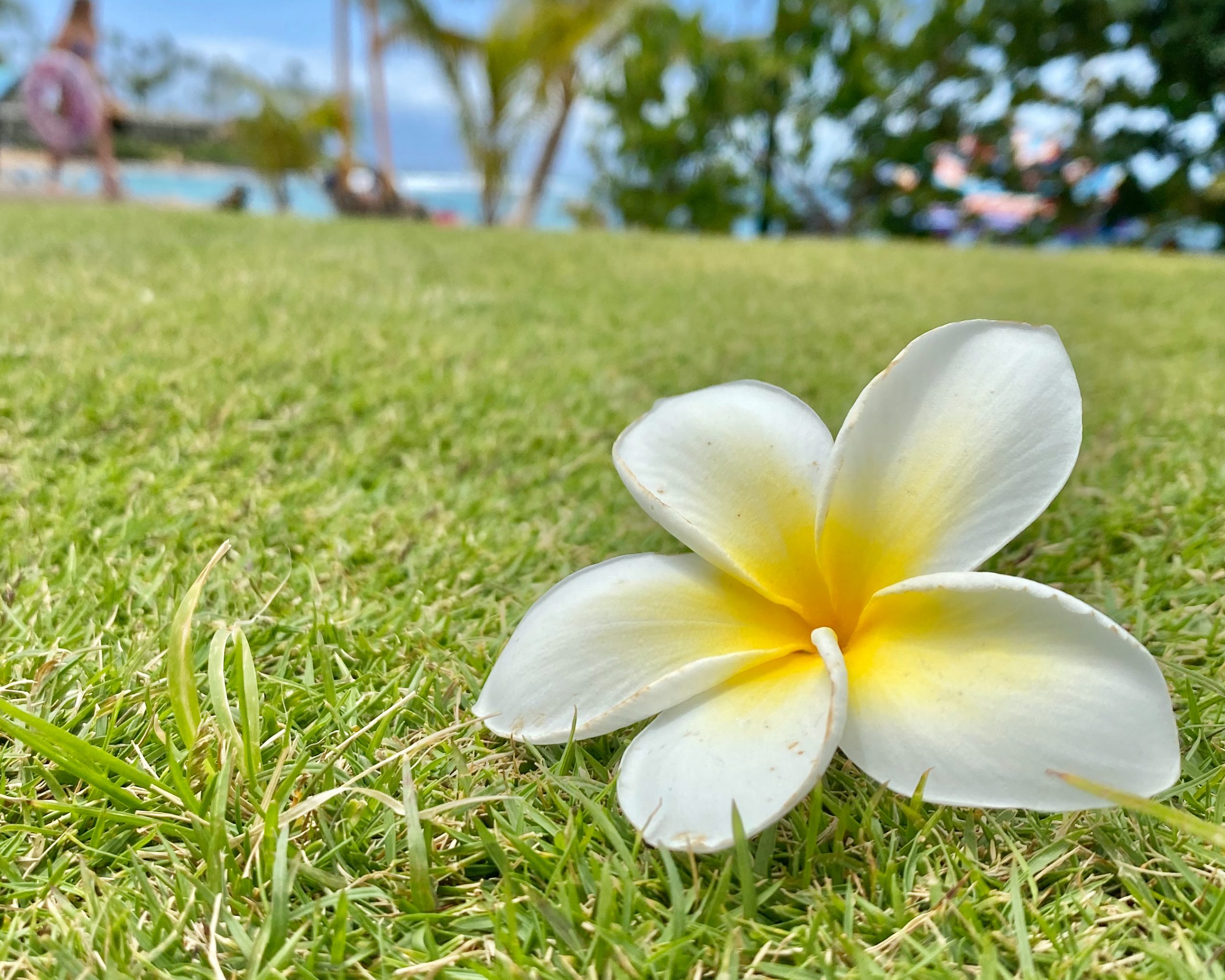
Plumeria is one of my favorite tropical plants. You can find these beautiful trees blooming throughout the Hawaiian Islands, filling the air with the sweetest fragrance. Their simple, elegant flowers instantly remind me of warm weather and tropical vacations.
I was thrilled to learn that you can grow a plumeria tree just from a cutting. I made it my mission to bring home several varieties from Maui, and watching those bare branches turn into thriving plants has been such a rewarding experience.
Growing plumeria from cuttings is easier than you might think. With a healthy cutting, well-draining soil, warmth, and a little patience, you can grow your own tropical plumeria tree at home.

How to Grow Plumeria from a Cutting
1. Take a Healthy Cutting
Sterilize your pruning shears with rubbing alcohol before cutting. Remove a 12–18-inch section from the end of a healthy branch.
Plumeria produces a milky sap that may irritate the skin and eyes, so wear gloves and avoid touching your face while handling fresh cuttings.
Remove any large leaves from the cutting. This helps reduce moisture loss while the cutting develops roots.
2. Let the Cutting Callous
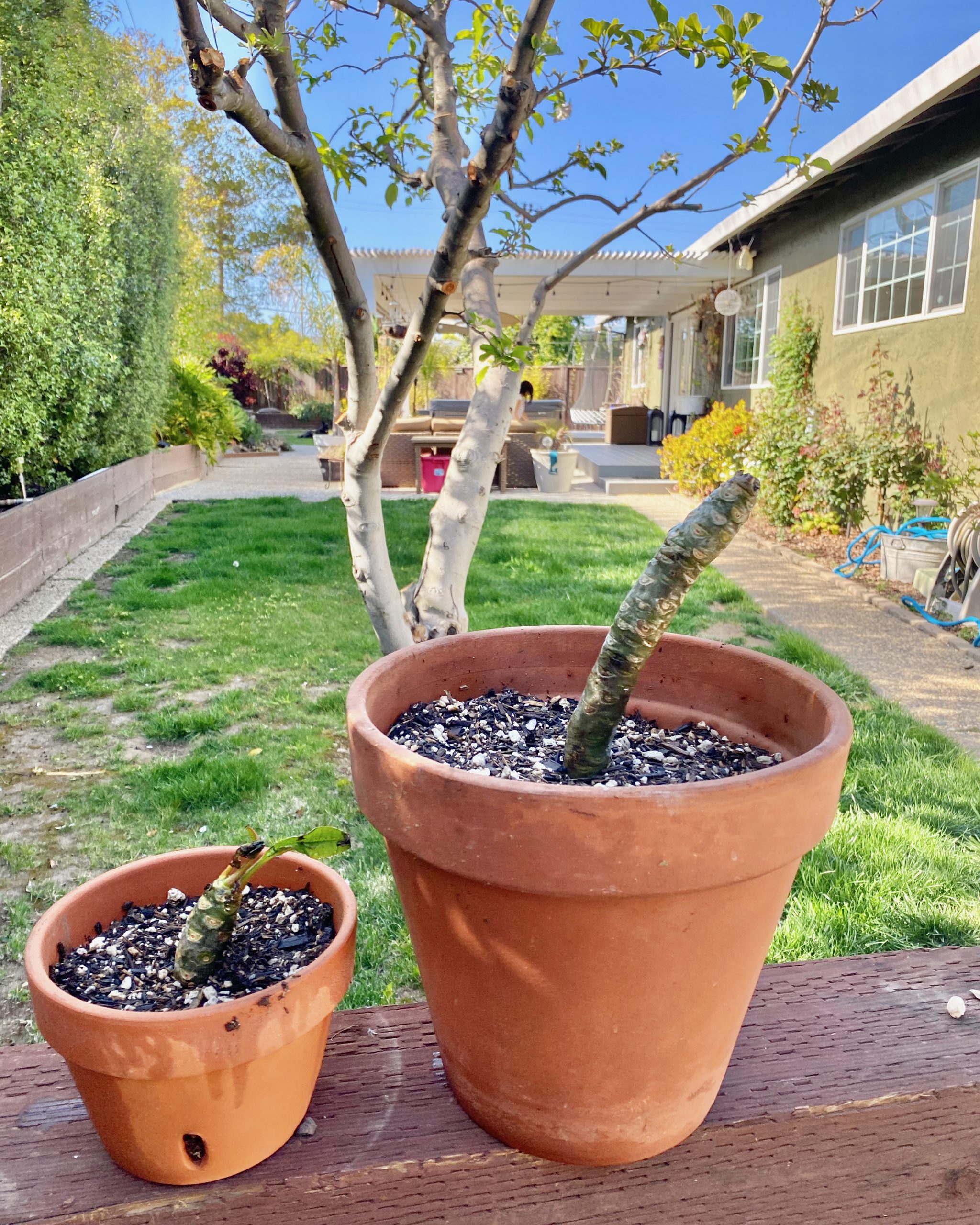
Place the plumeria cutting in a warm, dry, well-ventilated location away from rain and moisture. Let the cut end dry until it forms a firm callus.
This usually takes several days and may take a week or longer, depending on temperature and humidity. Proper callusing is important because it helps protect the cutting from rot after planting.
Do not seal a fresh cutting inside an airtight plastic bag, which can trap moisture.
3. Prepare the Pot and Soil
Choose a sturdy pot with drainage holes. A smaller pot is often better than an oversized one because excess soil can retain too much moisture around the cutting.
Fill the container with a fast-draining cactus, palm, or succulent potting mix. If the soil still feels heavy, mix in additional perlite or coarse sand to improve drainage.
Plumeria does not like sitting in soggy soil, so good drainage is one of the most important parts of the process.
4. Apply Rooting Hormone
Once the cut end has completely calloused, dip it into rooting hormone powder. Avoid cutting the branch again after it has calloused. A new cut creates a fresh wound that will need to dry and seal before planting.
5. Plant the Plumeria Cutting
Insert the calloused end of the cutting approximately 3-4 inches into the soil. Gently press the potting mix around the base to hold it in place.
6. Water Sparingly
Give the soil a light initial watering to help settle it around the cutting. After that, water sparingly while the plumeria roots.
Allow the potting mix to dry between waterings. Constantly wet soil is one of the most common causes of plumeria cuttings rotting before they establish roots.
7. Place It Somewhere Warm and Bright
Place the potted cutting in a warm location with bright light. Protect a newly planted cutting from cold temperatures and prolonged heavy rain.
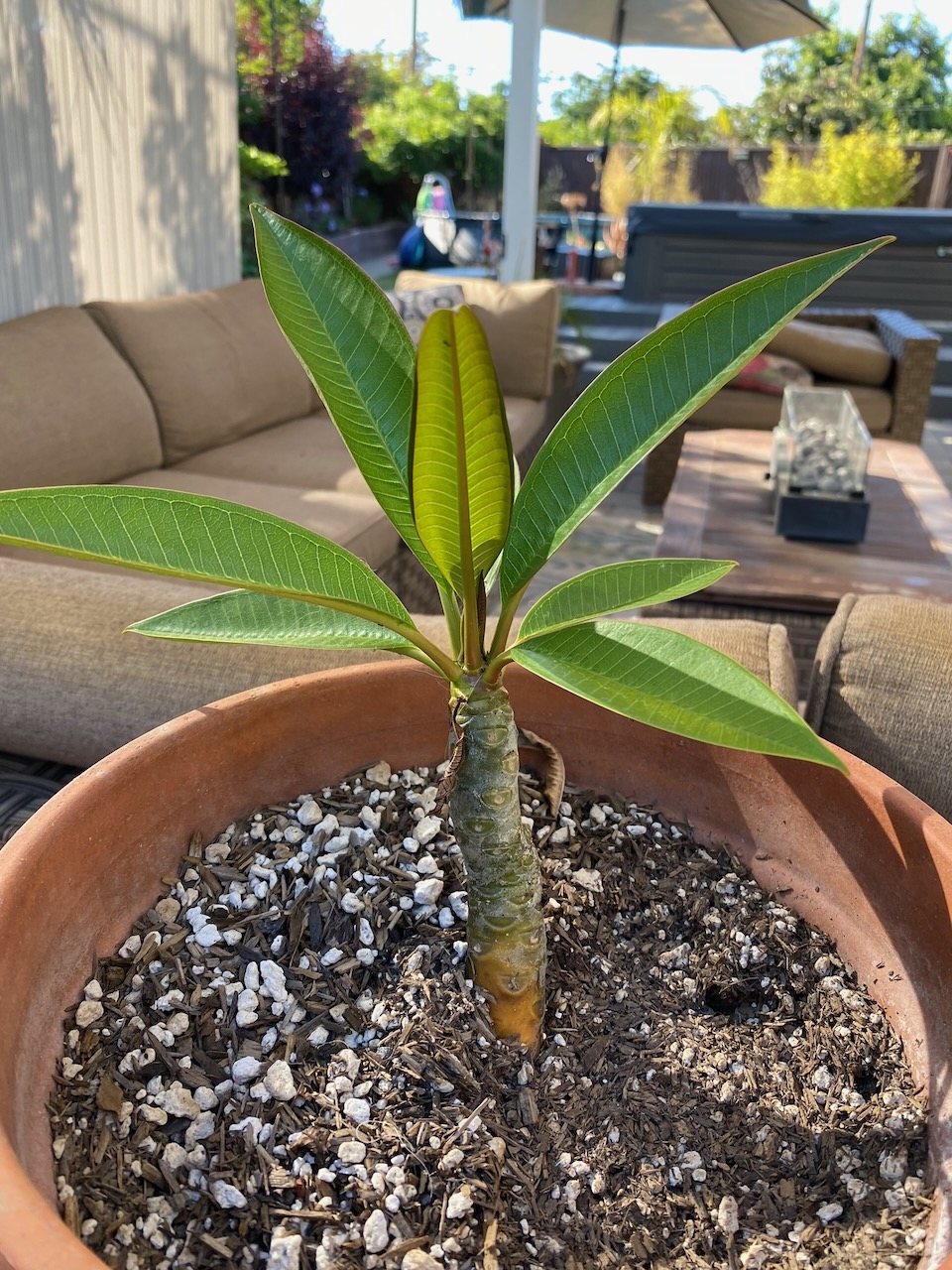
Once new leaves begin to develop, gradually introduce the plant to more direct sunlight. Mature plumeria plants grow and flower best with plenty of sun, but a newly rooted cutting may need time to adjust.
How to Care for a Newly Rooted Plumeria
Once your plumeria has established roots and started growing leaves, follow these basic care tips:
- Sunlight: Gradually move it into full sun or the brightest location available.
- Water: Water deeply, then let the soil dry somewhat before watering again.
- Soil: Always use fast-draining soil and a container with drainage holes.
- Temperature: Protect plumeria from frost and freezing temperatures.
- Dormancy: Reduce or stop watering when the plant drops its leaves and becomes dormant during cooler weather.
- Repotting: Move the plant into a slightly larger container once it becomes root-bound.
Frequently Asked Questions About Growing Plumeria from Cuttings
- How long does it take a plumeria cutting to root?
- A plumeria cutting typically begins developing roots within six to eight weeks. The exact timing depends on warmth, sunlight, moisture, and the condition of the cutting. New leaf growth is a good sign that roots may be forming.
- Why is my plumeria cutting soft or mushy?
- A soft or mushy stem often indicates rot caused by excess moisture or poor drainage. Healthy plumeria cuttings should feel firm. Always use fast-draining soil and allow it to dry between waterings.
- Why doesn’t my plumeria cutting have leaves?
- It is normal for a newly planted plumeria cutting to look like a bare stick while it develops roots. Keep it warm, provide bright light, and be patient. Avoid pulling on the cutting to check for roots because this can damage new growth.
- Why are my plumeria leaves turning yellow?
- Yellow leaves can result from overwatering, cool temperatures, transplant stress, or seasonal dormancy. Check that the pot drains properly and let the soil dry somewhat before watering again.
- How often should I water a plumeria cutting?
- Water very sparingly while the cutting is developing roots. After the plant is established, water it thoroughly and then allow the soil to dry somewhat before watering again. Constantly wet soil can lead to root rot.
- Does plumeria need full sun?
- Established plumeria plants grow and flower best with plenty of direct sunlight. Give a newly rooted cutting bright light at first, then gradually introduce it to more direct sun as leaves begin to develop.
- When will a plumeria cutting bloom?
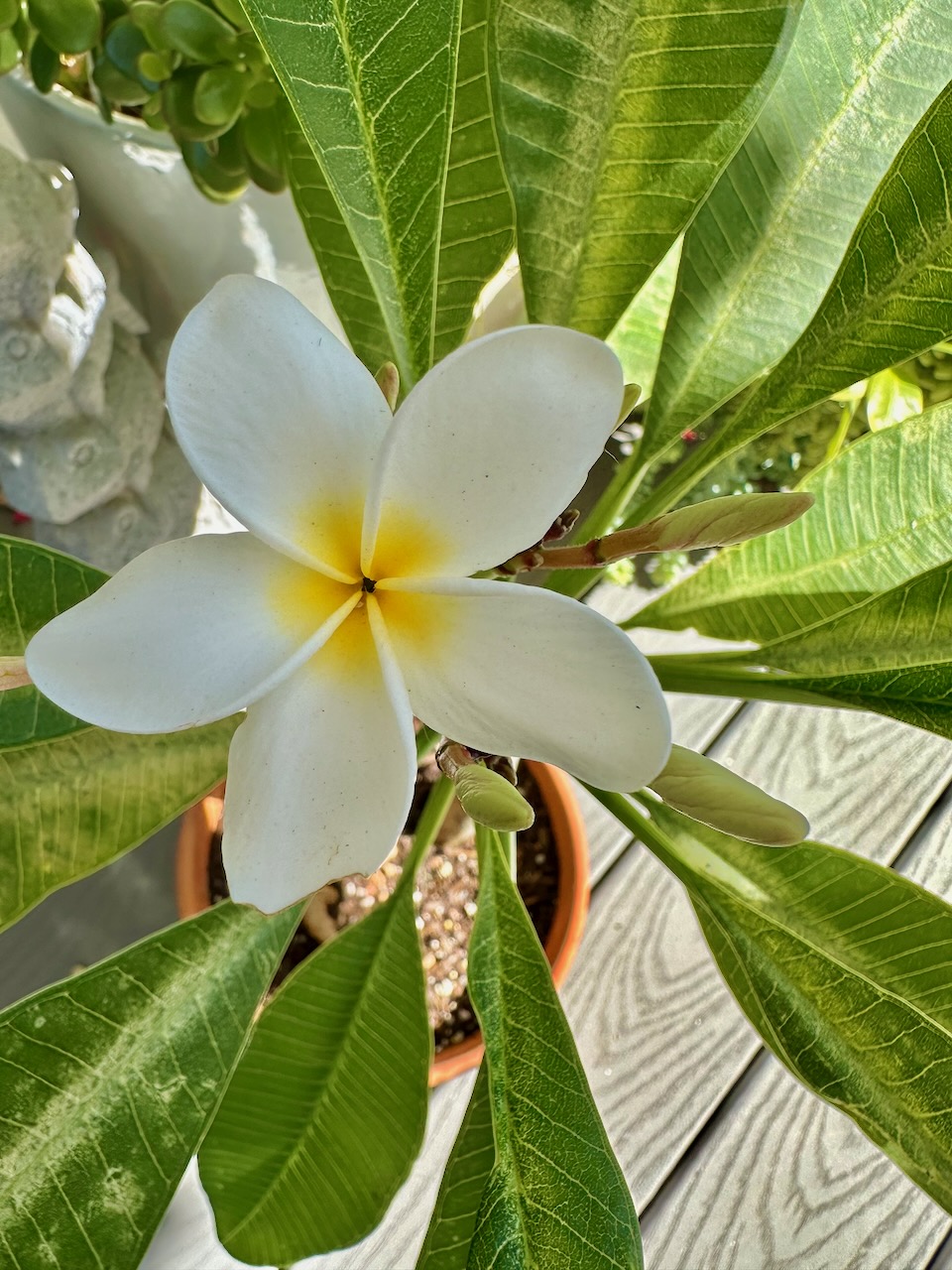
- A plumeria grown from a cutting may need one or more growing seasons to produce its own flowers. The timing depends on the variety, climate, sunlight, and overall growing conditions.
- Can plumeria survive the winter?
- Plumeria is a tropical plant and needs protection from frost and freezing temperatures. In cooler climates, grow it in a container so you can move it to a protected location during winter. Reduce or stop watering when the plant drops its leaves and enters dormancy.

Mom of two and seeking sanity in the everyday. Let’s chat about family, school struggles, travel, and living our best life. Located in the San Francisco Bay area.